
Why Corporate Finance Will Soon Run on Digital Rails
AI agents and digital rails are converging at the largest banks. For corporates, building this capability now is low-cost, low-risk, with material upside.
Independent research on digital capital markets infrastructure, regulatory developments, and institutional adoption. Governance-first analysis. Zero vendor influence.
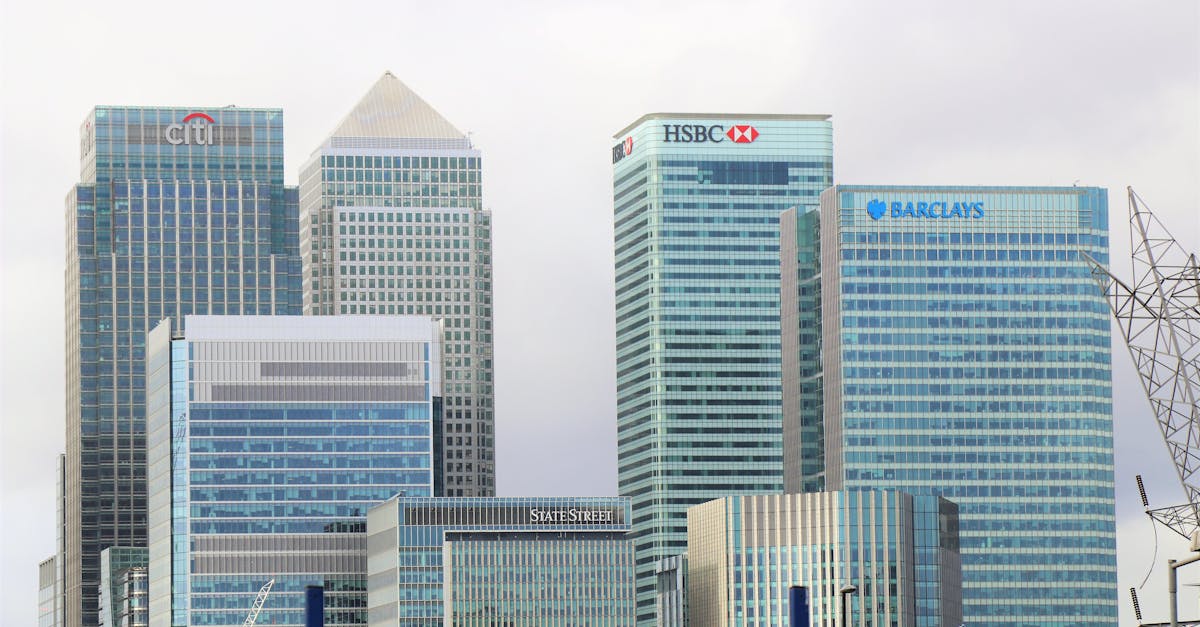
Jamie Dimon's shareholder letter, a four-bank stablecoin consortium, HSBC's US tokenized deposit launch, and Citi's custody commitment. Four global systemically important banks made public tokenization commitments in a single week.
AI agents and digital rails are converging at the largest banks. For corporates, building this capability now is low-cost, low-risk, with material upside.
Four global systemically important banks made public tokenization commitments in a single week. Dimon's letter, a four-bank stablecoin consortium, HSBC's US tokenized deposit launch, and Citi's custody commitment.
Five documented permissioned chain failures totaling $695M+. Why the governance model, not the technology, failed. The institutional migration to public blockchains with privacy layers.
The world's largest financial market infrastructures define six principles for tokenized capital markets. $16 trillion by 2030. What the digital twin architecture means for institutional adoption.
Five countries, five regulatory approaches. Lessons from the US, EU, Brazil, Argentina, and Colombia for jurisdictions seeking to enable digital capital markets.
Digital capital markets allow companies to access institutional financing with 40-60% lower costs and 2-3 month timelines. The EIB, BlackRock, and the IDB have already issued.
A digital dollar is not speculative. It is a dollar backed 1:1 by US Treasury bonds and cash, regulated and auditable. $78.8B in circulation.
Four pillars of digital infrastructure are transforming corporate treasury. Estimated impact: $3-5M annually for a company with $200M in operations.
A company with $200M in international payments loses $2-3M yearly in hidden spreads. How digital infrastructure cuts costs 50-70%.
Fidelity, Tether, and OSL launched stablecoins in February 2026. The $312B market is no longer a duopoly. What institutional allocators need to know.
JPMorgan data: 89% of family offices hold zero digital assets, average allocation just 0.4%—even as infrastructure accelerates.
Banks vs. stablecoin issuers on yield. CLARITY Act Section 404, the affiliate loophole, and treasury implications.
Europe-to-US corridor: How to settle $5M payments in under 30 minutes at 1/10th the cost of SWIFT wires.
USDC vs USAT: Governance, transparency, and compliance analysis for institutional investors in the $260B stablecoin market.
First-ever SEC application to tokenize ETF shares. TBIL would maintain same CUSIP with blockchain settlement.
Circle's USYC reached $1.69B in January 2026, overtaking BlackRock's BUIDL. Analysis of why deposit tokens are winning.
Why your bank's "competitive" FX rate is costing you a fortune. Modern payment rails can reduce cross-border costs by 40-60%.
From Hong Kong's HK$10B digital green bond (13× oversubscribed) to Société Générale's embedded carbon tracking experiment — a review of landmark transactions and the European institutional buyers driving demand.
Brazil has closed R$1.5B+ in tokenized securities. Colombia executed LatAm's first blockchain bond in 2022. Argentina built the regulatory sandbox in 2025. The map of who is transacting versus who is still preparing.
Why the tokenized asset market is $20B, $36B, or $338B depending on methodology—and when to use each number in your presentations.
Deloitte projects tokenized real estate at $4T by 2035. RealT and Lofty deliver 9-11% yields with $50 minimums.
Vendor-affiliated advisors increase costs by 118-127% over three years. Only 10-15% of digital asset advisors meet genuine independence standards.
Tokenized gold surpassed $4.2B in January 2026 with gold above $4,500/oz. XAUT ($2.2B) and PAXG ($1.7B) deliver 40-60% cost savings with 3-8% programmable finance yields.
Why BlackRock chose RedStone over Chainlink for BUIDL, and what the oracle selection decision means for institutional tokenization strategy.
The first federal stablecoin framework mandates 1:1 reserve backing, monthly attestations, and five OCC charter approvals.
Comprehensive comparison of custody providers including Anchorage, BitGo, Fireblocks, and traditional institutions with cost analysis and regulatory requirements.
Comprehensive institutional guide examining 7 tokenized asset classes with $36B current market projected to reach $3.5-10T by 2030. Features BlackRock BUIDL analysis.
How tokenized assets provide true diversification with minimal correlation (0.0-0.3) to traditional investments, reshaping institutional allocation strategies.
The EU's Markets in Crypto-Assets regulation creates new opportunities and obligations for tokenized securities issuers entering European markets.
Analysis of January 2026 regulatory changes creating significant capital advantages for tokenized securities versus cryptocurrency holdings.
Five critical infrastructure advances enabling scalable tokenization: transaction speed, custody solutions, regulatory clarity, security frameworks, and interoperability.
Private credit emerges as the dominant sector with $14 billion tokenized. Analysis of commodities, infrastructure, and other high-growth verticals.
Inside institutional adoption: BlackRock's BUIDL fund, Goldman Sachs' digital asset infrastructure, and JPMorgan's digital securities initiatives reshaping capital markets.
How institutional giants are positioning capital in the digital securities market, with projections reaching $16 trillion by 2030.
Institutional-grade research on digital capital markets, delivered to your inbox. No spam. Unsubscribe anytime.
Deep dives into the areas that matter most to institutions and corporates.
13 articles
6 articles
5 articles
7 articles